Salers prove the ideal suckler cow
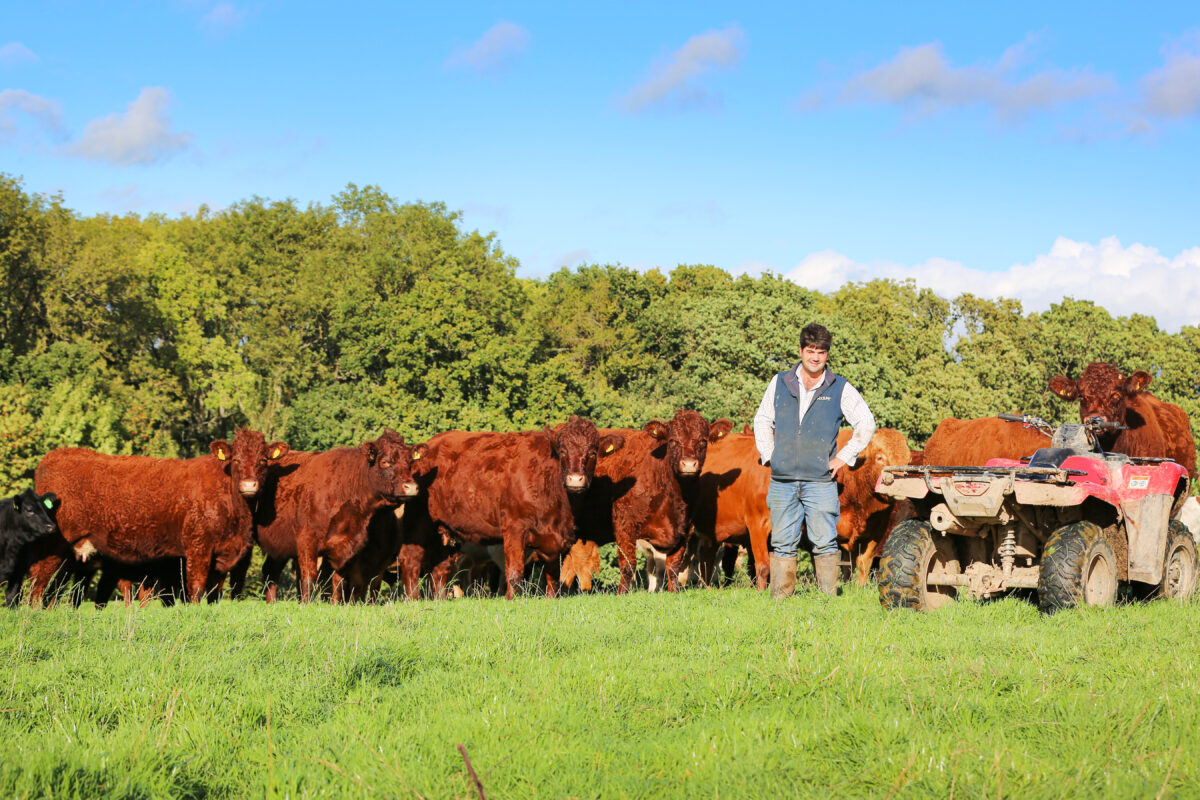
Farming 1200 acres and a total of 1300 head of beef, as well as running an agricultural contracting business, the Parr family need a hassle free suckler herd. Their farm is made up of 700 acres of grass, 250 acres of maize and 250 acres of wheat, as well as an Approved Finishing Unit (AFU) alongside the 225 suckler cows. However, even with all that, the family feel that without the suckler herd, their lives wouldn’t be as straight forward.
“We farm cattle across five different blocks of land with three different sets of cattle yards. However, our location and the local climate are on our side, with the ability, due to ground conditions, to have some cattle outside from February until December,” explains Max. “In addition we can often be making first cut silage in mid-April, resulting in good quality forage.”
“We added a few extra replacments from the Ashbury herd in the early years until we were producing enough of our own and we were lucky enough to be able to buy the Austin family’s Morwenstow herd in 2022.
“As a result more than half of the herd is now pure Salers, with the remainder made up of a variety of other breeds,” explains Max who manages the farm with full time stockman, Ben.
Cows are split into spring and autumn calving blocks, with 150 calving in spring and 60 in the autumn. Alongside this, 35 heifers calve in each year, with these calving at 24 months old and most being pure Salers.
“The cows are all put to Charolais, Limousin and Parthenais bulls, while the heifers all calve to Salers to breed replacements,” he says.
Running such a large herd means the Parrs have no space for passengers and any animal with an issue, including barrens, lame cows, those losing a calf or those with bad udders are all marked to be culled. “We also have a strict age-based culling strategy too, so anything which reaches 12 years old is then culled at the next opportunity.
“All of those animals culled are put into our Approved Finishing Unit (AFU) for finishing before being sold. We generally finish about 1800 head a year through the AFU, including all of our own cattle and a further 1600-bought in stores, with about 800 on-site at any one time.”
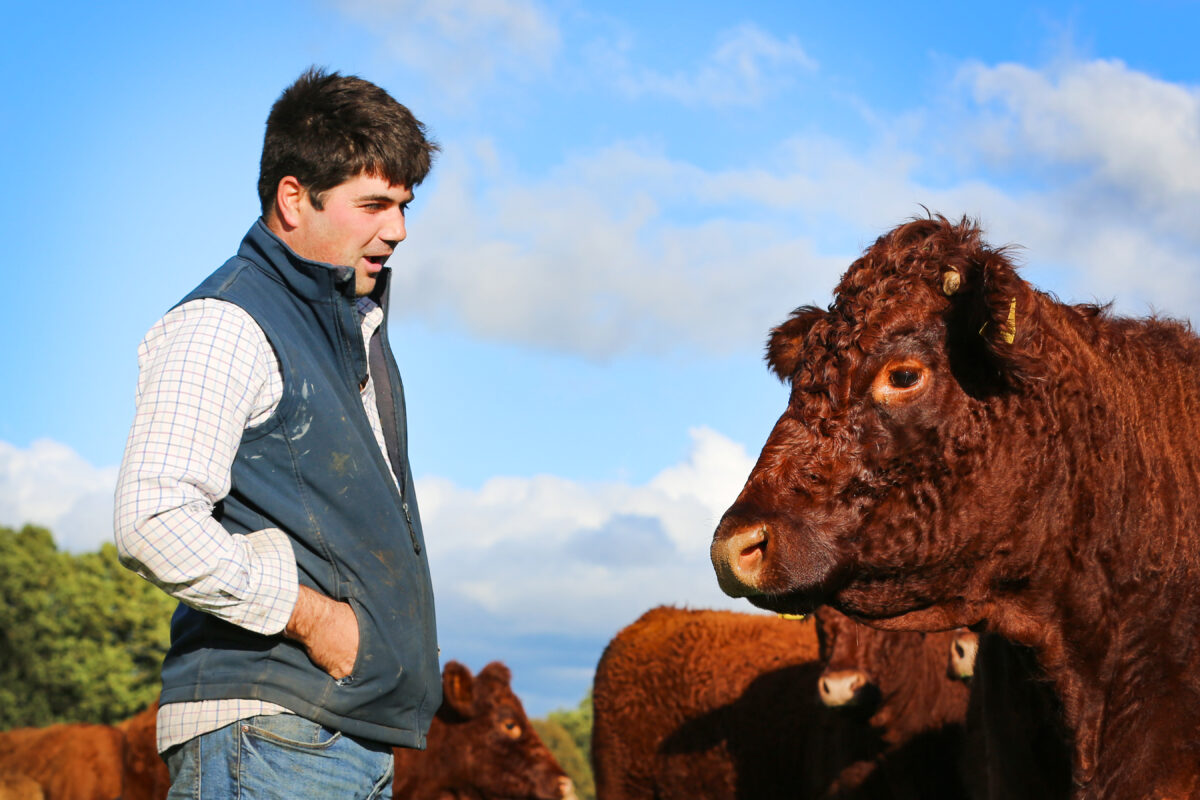
In addition, despite what many may say, the Salers cows have an excellent temperament and are easy to work with no matter what’s being done. “I’ve heard plenty of folk suggest Salers are wild, but we’ve never seen a problem with them. We can work our cows safely without any fuss or hassle.”
Keen to maximise herd health and, as a result, productivity, every calf is BVD tag tested at birth and all cattle are IBR vaccinated. “We used to vaccinate for BVD, but now we tag test we’ve stopped vaccinating and shouldn’t need to resort to it again. All cattle are, though, IBR vaccinated, with a clostridial vaccination used too.”
Aiming to maximise production from grass, spring-born calves graze with their mothers through the summer, before being weaned in autumn and heading to the AFU to be grown on for the first few months, before being finished.
“All bull calves are left entire and move to the AFU at weaning where they are fed silage and about 5kg/head of a 17% blend for the first month. Then they move onto ad-lib feeding of the same blend for a couple of months before being put onto an ad-lib 14% finishing nuts when they’re about 10 months old and 450kg in weight.
“This is fed alongside hay or haylage and feed quality straw. The bull calves are all finished by 16 months old and sold deadweight to ABP, with carcass weights averaging about 370kg and grades consistently being Us and Rs.
“A lot of this performance is thanks to the early growth they achieve thanks to the milkiness of the Salers cows. That sets them up well for future and means we can push them on once they’re housed.
“It costs about £1.80/day for the first couple of months they’re housed and then about £3/day for the final few months, giving total feed costs of about £560/head for the finishing period. However, we don’t feed any creep pre-weaning, so that balances out things.”
Heifer calves are run separately and receive silage and 3kg/head of blend from weaning to turn out the following spring, with replacement heifers selected at this point. Those not required as replacements are finished through the AFU.
Meanwhile, the autumn calving herd are grazed on local RSPB Marshes and housed in late November. “Bulls go back in with the cows on 20th November and cows and calves are turned back to the marshes in the spring as soon as weather allows, but generally in February or March. Cows are scanned before turnout and empty cows marked ready to be culled at weaning.
“Calves are then weaned in June and July as grass starts to burn off and cows are brought back closer to home ready for calving. These calves then follow a similar regime to the spring-born calves.”
“We farm cattle across five different blocks of land, with three different sets of cattle yards. However, our location and the local climate are on our side, with the ability, due to ground conditions, to have some cattle outside from February until December. In addition we can often be making first cut silage in mid-April, giving some good quality forage.
“The Salers are proving their worth as a good all-rounder for us, producing good, healthy live calves that get up and suck straight away without compromising carcass weights and conformation,” adds Max. The family have tried a few Stabliser cows in recent years, but weaning and killing out weights just don’t compare. “As our herd naturally self-replace with Salers, we are noticing better fertility and weaning rates. Now we’ve got the breeding sorted we are focussing on imprpving conformation and age to slaughter,” he adds.